The appliance aisle is the same trap as the furnace filter aisle. You are holding two variables and no record. Guessing from memory, from the last Amazon order, or from a faded box in the junk drawer is exactly how you buy twice.
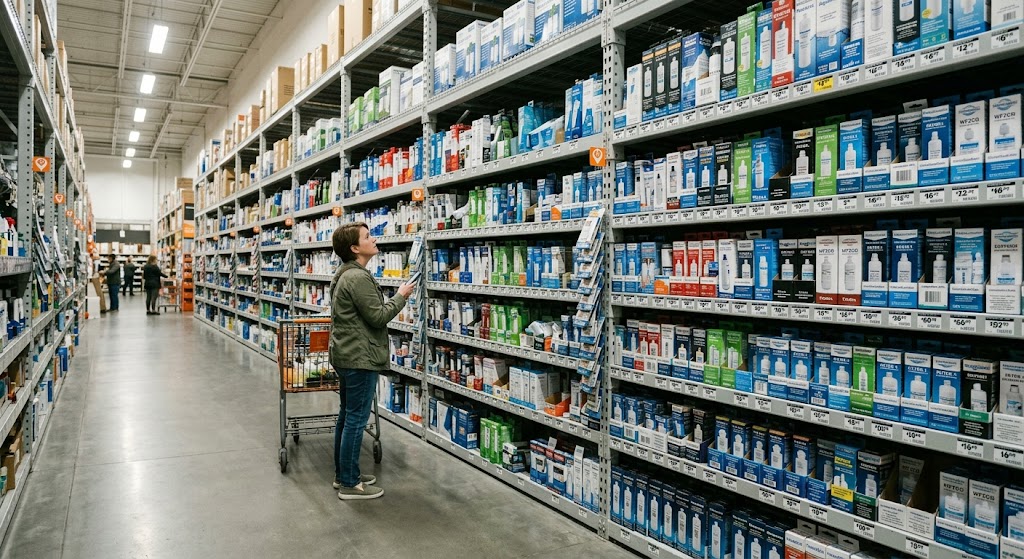
The appliance aisle is the same trap as the furnace filter aisle. You are holding two variables and no record.
Guessing from memory, from the last Amazon order, or from a faded box in the junk drawer is exactly how you buy twice. You do not need to re-solve these variables in the store. You need the machine definitively identified, and the exact-fit replacement part attached directly to that specific asset.
The model and serial number on a refrigerator is located on a data plate inside the door liner, on the ceiling of the upper compartment, or behind the bottom kickplate. It is never on the front decorative badge. The model string defines replacement filter and shelf dimensions, while the serial tracks warranty status.
Without those two specific lines of text, you cannot order a filter, a shelf, an ice maker, or a pump that actually fits. “It’s an LG fridge” is not a specification. The badge on the door is styling. The data plate is the identity.
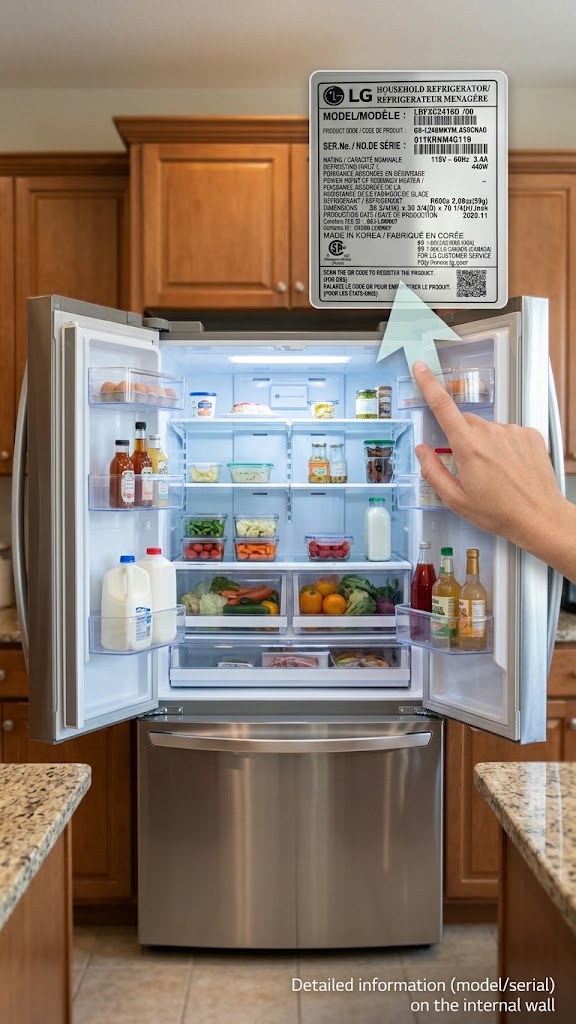
The model number defines the cabinet. The serial defines the unit. Together, they unlock the manual, the exact filter family, the ice-maker replacement kit, and critical safety recall checks. Neither of those numbers is printed on the generic water-filter box you threw away six months ago.
Washer and dryer plates are even worse. They live where you only look when the floor is wet. If you do not capture them while the machine works, you will be on your back with a flashlight after it fails.
Fridge water filters are the HVAC filter problem with a different SKU. Every brand has a family of cartridges that look interchangeable but are fundamentally not.
Filters are physically keyed to a specific housing. The thread, length, and bypass valve differ by series, not simply by “LG” as a brand. A “universal” filter that manages to thread in and trip the replacement light can still be the wrong media. A cartridge that fits the hole but does not seal is exactly how you get a slow drip, a bypass leak, or water that never actually hits the filtration media.
Dryers and washers follow the exact same pattern: lint housings, drain pumps, and inlet screens—"close enough" is still the wrong OEM part. Shelves, bins, ice makers, and dispenser paddles are strictly model-specific. A photo of a broken shelf without the model string is a junk-drawer project, not an order.
Photograph the manufacturer sticker. Answer3 Vault uses an AI scanner to instantly write the brand, model, serial, age, and system type to a permanent Digital Home Passport card for that appliance.
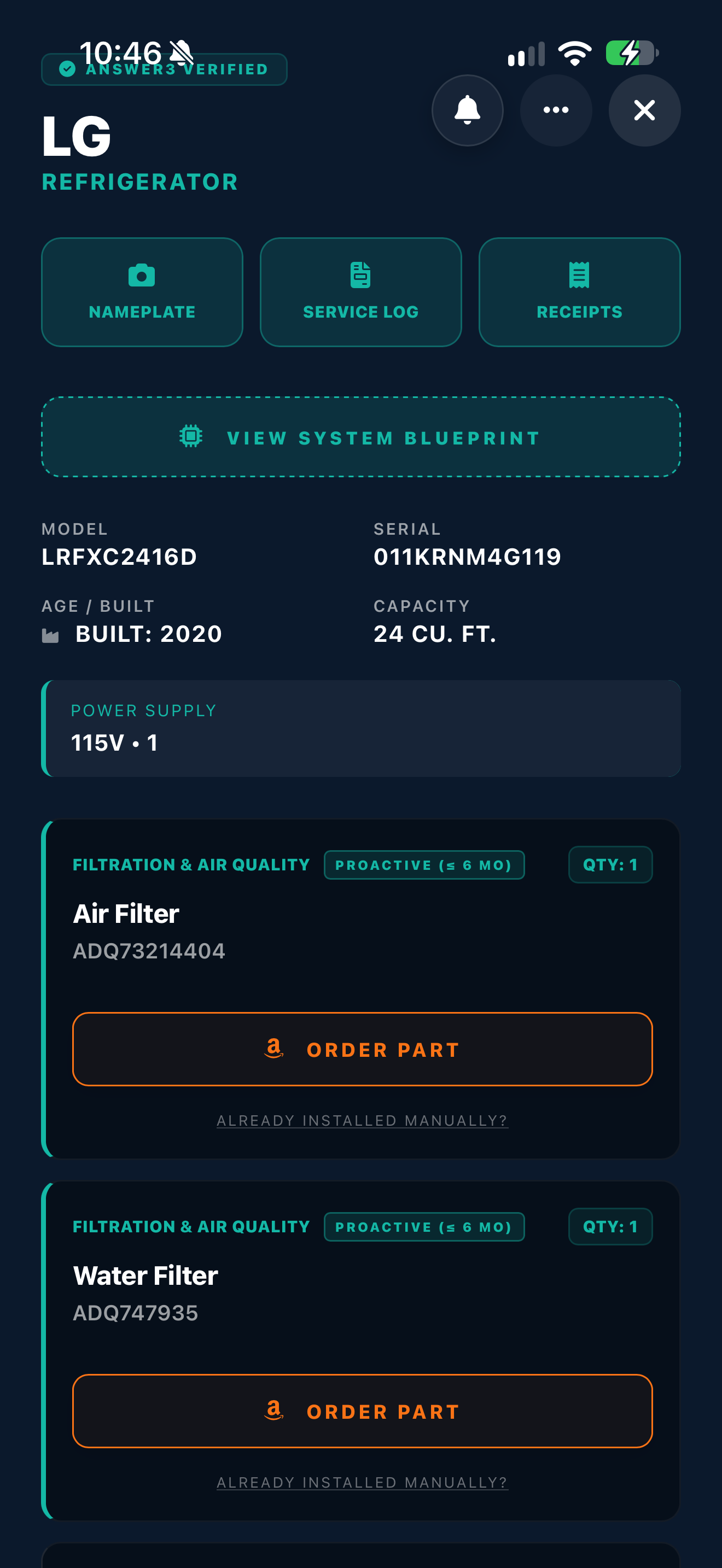
From that identity, the System Blueprint automatically attaches the consumable line: the exact-fit water filter or wear part, not a universal lookalike. You receive a reminder when the filter is due, and you can order it directly from the card to the Amazon path for this exact model.
You are not squinting inside a freezing door liner or crouching with a flashlight to read six-point type off a kickplate. You are not matching a cartridge by eye in the store. The plate identifies the asset. The blueprint closes both guesses.

Exact-fit filters and verified parts routed directly to Amazon. Stop shopping from scratch and let the Home Passport build your OEM filter matrix automatically.
Download on theScan once. Keep the card. Order the filter and the part directly from the card.