An unlabeled electrical panel is two massive problems stacked inside one steel box. Taking a blurry photo of the grey door and texting it to an electrician is not documentation. It is just a picture of ignorance with a flash glare.
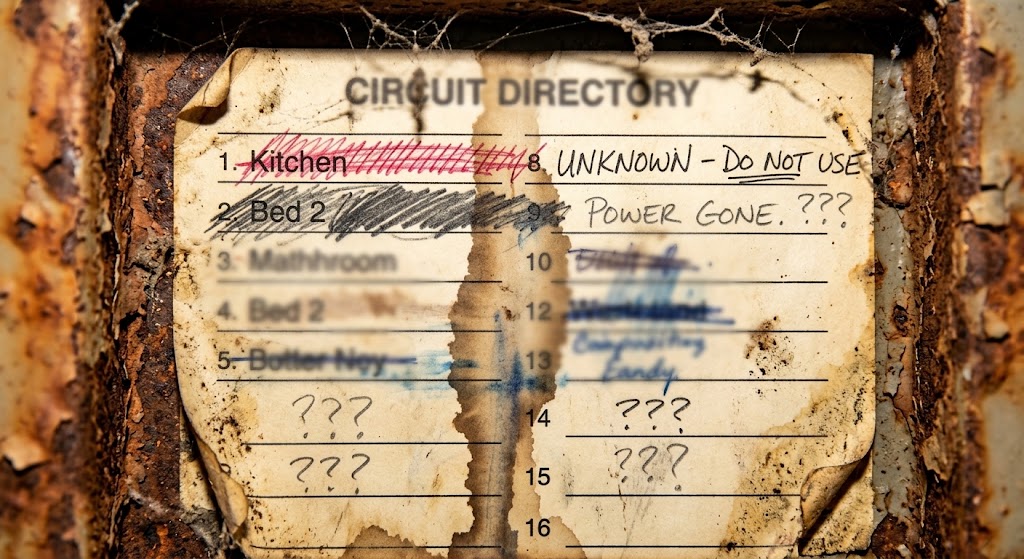
An unlabeled electrical panel is two massive problems stacked inside one steel box.
Taking a blurry photo of the grey door and texting it to an electrician is not documentation. It is just a picture of ignorance with a flash glare. You cannot add a circuit, upgrade your service, or safely kill power in an emergency without definitively knowing what the hardware is and what each handle feeds.
Brand, model, bus rating, and main-breaker size live on a manufacturer stamp or sticker on the inside of the can or behind the deadfront.
“It’s a 200-amp box” is not a specification. The exact panel series dictates how many physical spaces are available, whether tandem (double) breakers are legally allowed, and whether the panel itself is a legacy brand with known fire hazards that must be replaced.
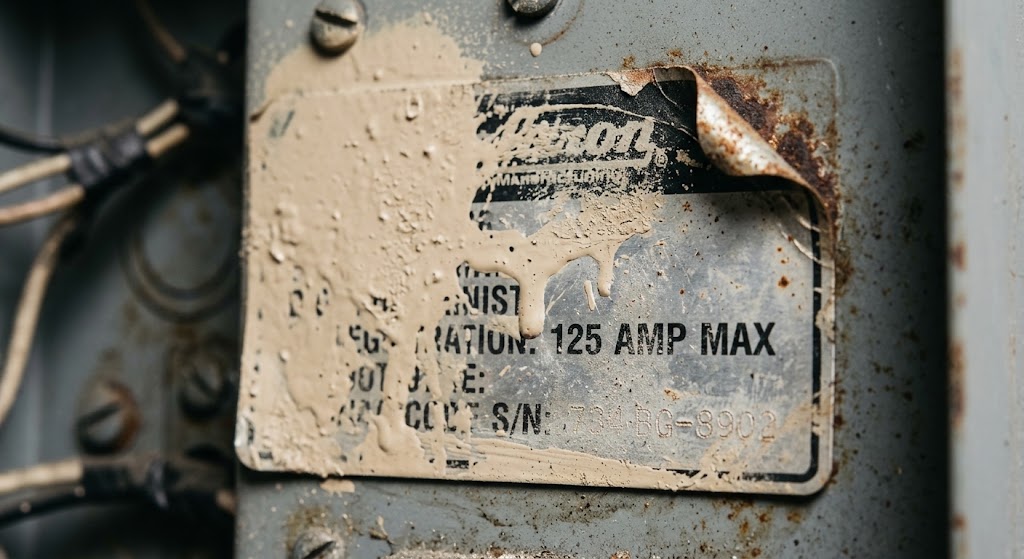
That label is how you know if the bus can safely take a new 60-amp breaker for an EV charger. Older panels hide that sticker on the side of the enclosure, on the inner deadfront, or under layers of basement paint. If a contractor has to discover those facts on-site, they are not installing yet. You are paying an hourly rate for a hardware census.
The nameplate tells you the machine. It does not tell you that breaker 7 is the well pump and breaker 8 is the home office.
The directory on the door is supposed to be the map. On an older house, it is entirely blank, written in faded pencil, or named for a room that became a home office in 2004. Flip a breaker on a guess and you find out the hard way that “kitchen” also kills the garage door opener.
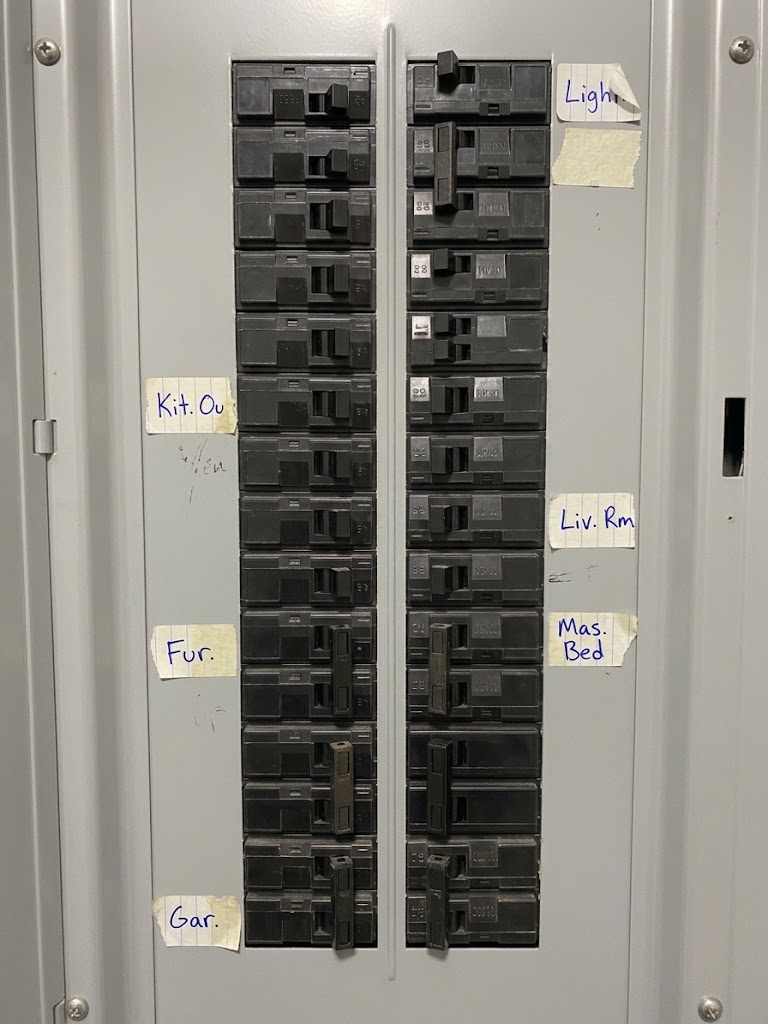
Without a verified map, every new electrical load is a two-person treasure hunt: flashlights, a helper upstairs, phones on speaker, snapping breakers one at a time. A paper directory that is incorrect is actually worse than a blank one. You trust it, you kill the wrong circuit, you get shocked, and you still do not have a reliable map.
You cannot AI-scan your way out of a blind electrical board. Most older panels do not even have a standard, readable nameplate. You have to build the identity yourself.
You manually log the brand, main breaker size, and maximum spaces directly into Answer3 Vault to create the foundation of your equipment card. Then, you map the circuits. When you flip a breaker and verify what room it kills, you log it into the Vault's Digital Twin Mapper. You rebuild the directory entirely in software: identifying used spaces, open slots, and exactly which breaker feeds which load.
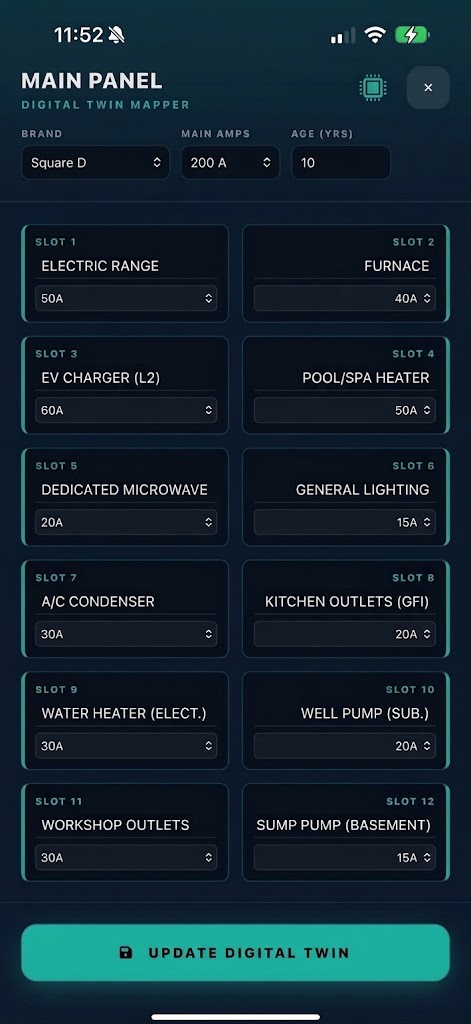
You do the manual legwork to map the board, but you only do it once. You are no longer keeping the only map to your home's electrical grid written in pencil on the inside of a rusted door. A digital twin cannot fade, it cannot be painted over, and it cannot be ripped off.
Once mapped, that digital twin does the heavy lifting. It provides the exact mappings required to order compatible replacement breakers, and it serves as the ultimate dispatch tool. When you need an EV charger or a heat pump installed, you initiate a service request. The Vault packages your exact ampacity, open slots, and verified circuit map into a digital dossier and routes it directly to an elite local contractor in the Answer3 Partner Network.
A quote can leave the house with the digital twin attached, rather than the standard "we’ll see when we get there."

Stop texting blurry photos of grey boxes. Request electrical service with absolute precision. Quantum routes your exact ampacity, open slots, and digital circuit map directly to vetted local contractors so they arrive ready to pull wire.
Download on theMap the board once. Keep the digital twin. Route exact specs to the professional.