Two things go wrong in the filter aisle. First: size. Second: MERV. The usual advice is to read the old filter and "pick a MERV rating you like." That is still homework every 90 days, and it is exactly how the last wrong filter gets copied year after year.
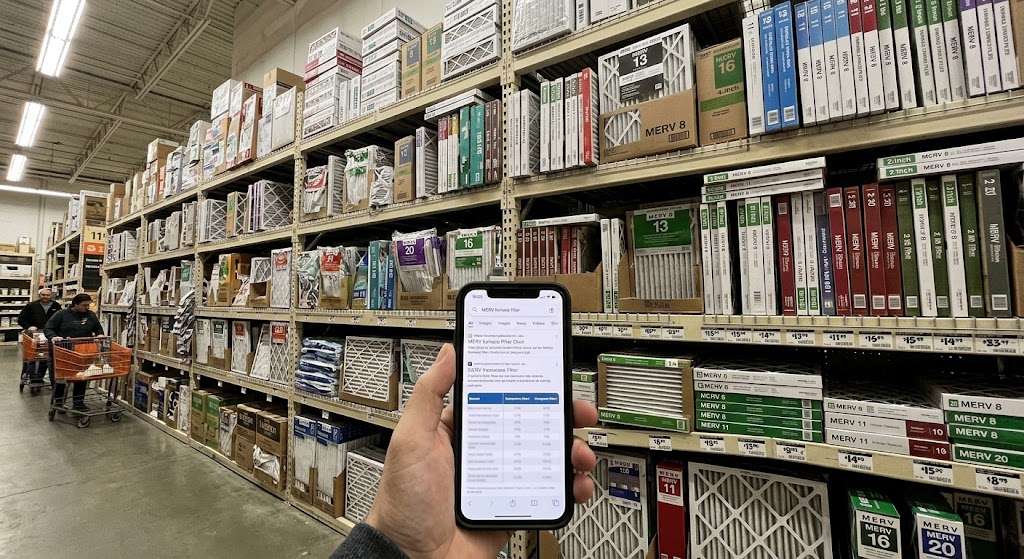
Two things go wrong in the filter aisle.
First: size. You cannot remember whether the furnace takes a 16x25x1 or a 20x25x1. Too big and you crush it trying to slide it into the slot. Too small and the filter leaves a one-inch gap, allowing unfiltered dust to completely bypass the media and hit your blower motor.
Second: MERV. The wall of filters is split into MERV 8, 11, and 13. Higher looks like “better.” But on a residential HVAC system that cannot pull through a highly dense filter, MERV 13 is exactly how you starve the blower motor, ice the evaporator coil, and drastically raise your utility bill.
The usual advice is to read the old filter, measure the empty slot with a tape measure, and “pick a MERV rating you like.” That is still homework every 90 days, and it is exactly how the last wrong filter and the last wrong rating get copied year after year. You do not need to re-solve size and MERV in the store. You need the machine definitively identified, and the exact-fit filter—dimensions and rating—attached directly to that machine.
The dirty filter currently sitting in your return slot is not a manufacturer spec. If someone already installed the wrong size—which happens frequently in residential real estate turnovers—you will simply buy the wrong size again.
Furthermore, the furnace model number is not a filter size. The metal data plate is the identity of the physical unit (brand, model, serial, electrical specs). The cardboard filter in the return drop is just a consumable. Two completely identical Trane furnaces can sit in two different houses on completely different return drops fabricated by two different local installers.
Nominal versus actual measurements make the aisle math even worse. Stores sell a nominal 16x25x1. But the filter itself is actually closer to 15.5" × 24.5" × 0.75". People measure the sheet metal hole, order the exact tape numbers online, and still miss the fit entirely.
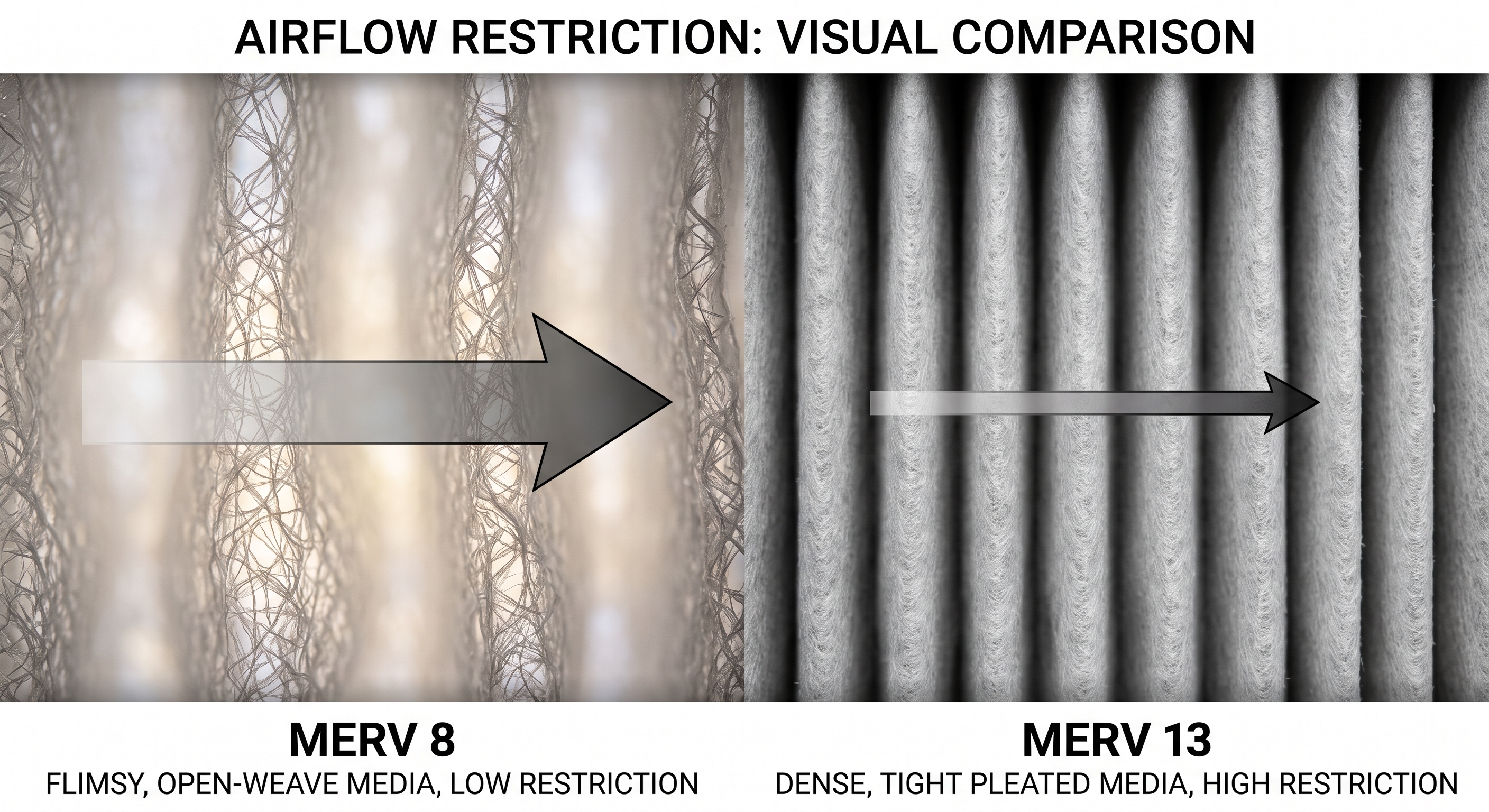
MERV is simply a measurement of how tight the filter mesh is. A MERV 8 filter is relatively coarse, catching dust and lint. MERV 11 is the usual home middle ground. MERV 13 catches microscopic particles like smoke and bacteria, but it also heavily restricts the volume of air that can pass through it.
A higher rating is not an upgrade if the blower motor and ductwork were not engineered for that level of static pressure drop. If you have an older PSC (single-speed) blower motor, forcing it to pull air through a MERV 13 filter is like trying to breathe through a heavy winter coat. It works harder, runs hotter, and eventually fails prematurely. The wrong MERV on the right size is still a fundamentally bad filter for your system.
People pick their MERV rating the same way they pick the physical size: flawed memory, flashy packaging, or whatever happens to be on sale on an end cap. That is the second guess the hardware store aisle forces you to make.
Point your camera at the manufacturer nameplate on your equipment. Answer3 Vault uses an AI scanner to instantly write the brand, model, serial, manufacturing age, and system type to a permanent Digital Home Passport card on your phone.
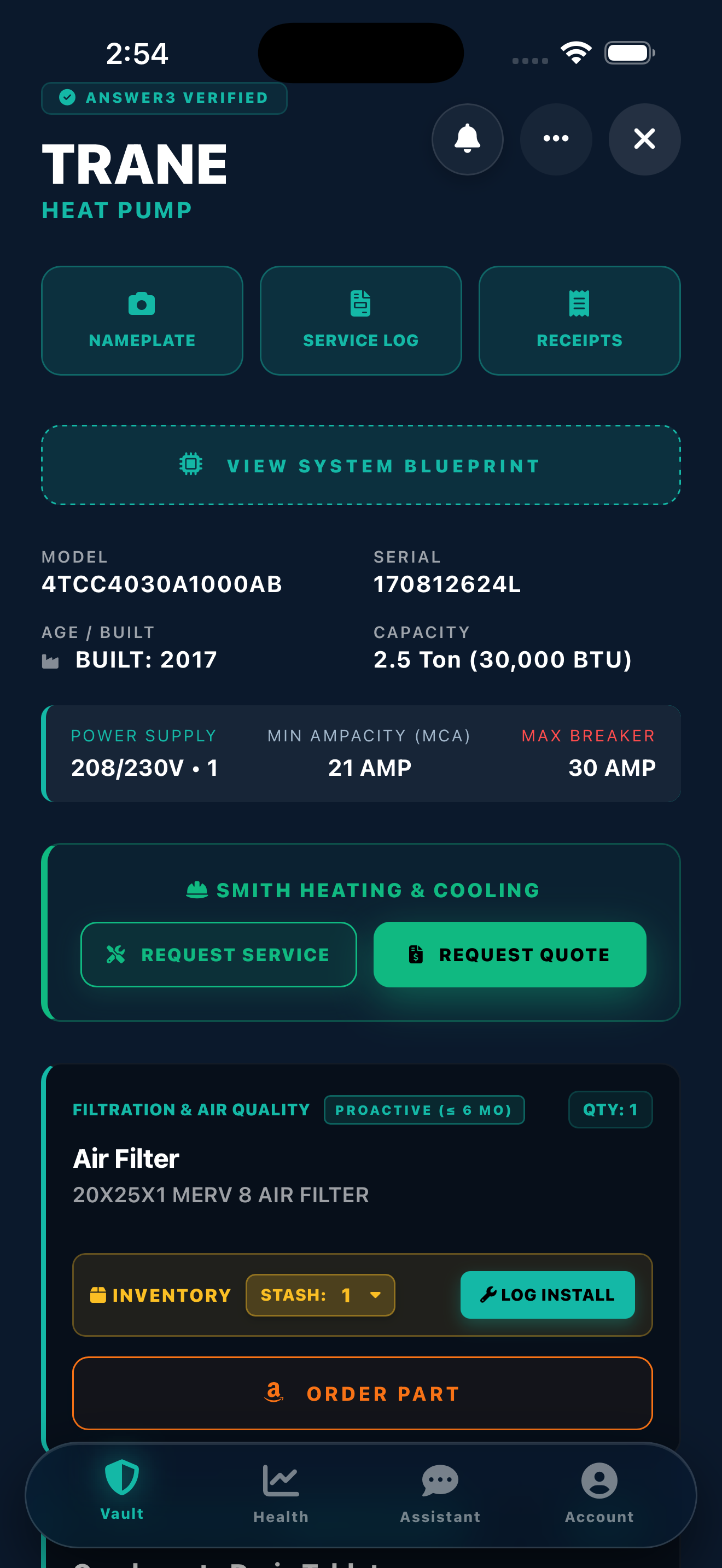
From that identity, the System Blueprint attaches the exact consumable line for that specific unit. It generates the exact-fit filter, locking in both the correct size and the optimal MERV rating (or the exact OEM media cabinet SKU when that is the required replacement).
You receive an automated push notification when it is due for replacement, and a one-tap path to order that exact part. It is not a generic square, and it is not a MERV rating you invented under fluorescent store lights.

Stop shopping from scratch. Digitize your equipment instantly and let the Home Passport build your exact-fit OEM filter matrix automatically.
Download on theScan it once. Keep the digital asset card. Order your precise size and rating directly from the card.