Managing the maintenance for a single swimming pool is a complex undertaking. When you scale that to a primary residence in the New Jersey suburbs, a beach house down the Shore, and a lake house out in the Pennsylvania Poconos, you are dealing with three completely different aquatic ecosystems. They were likely installed by three different local contractors, utilizing a fragmented mix of Hayward, Pentair, and Jandy hardware. Remembering which property takes 300 pounds of silica sand and which one requires a 230-volt pump motor is impossible without a centralized digital ledger.
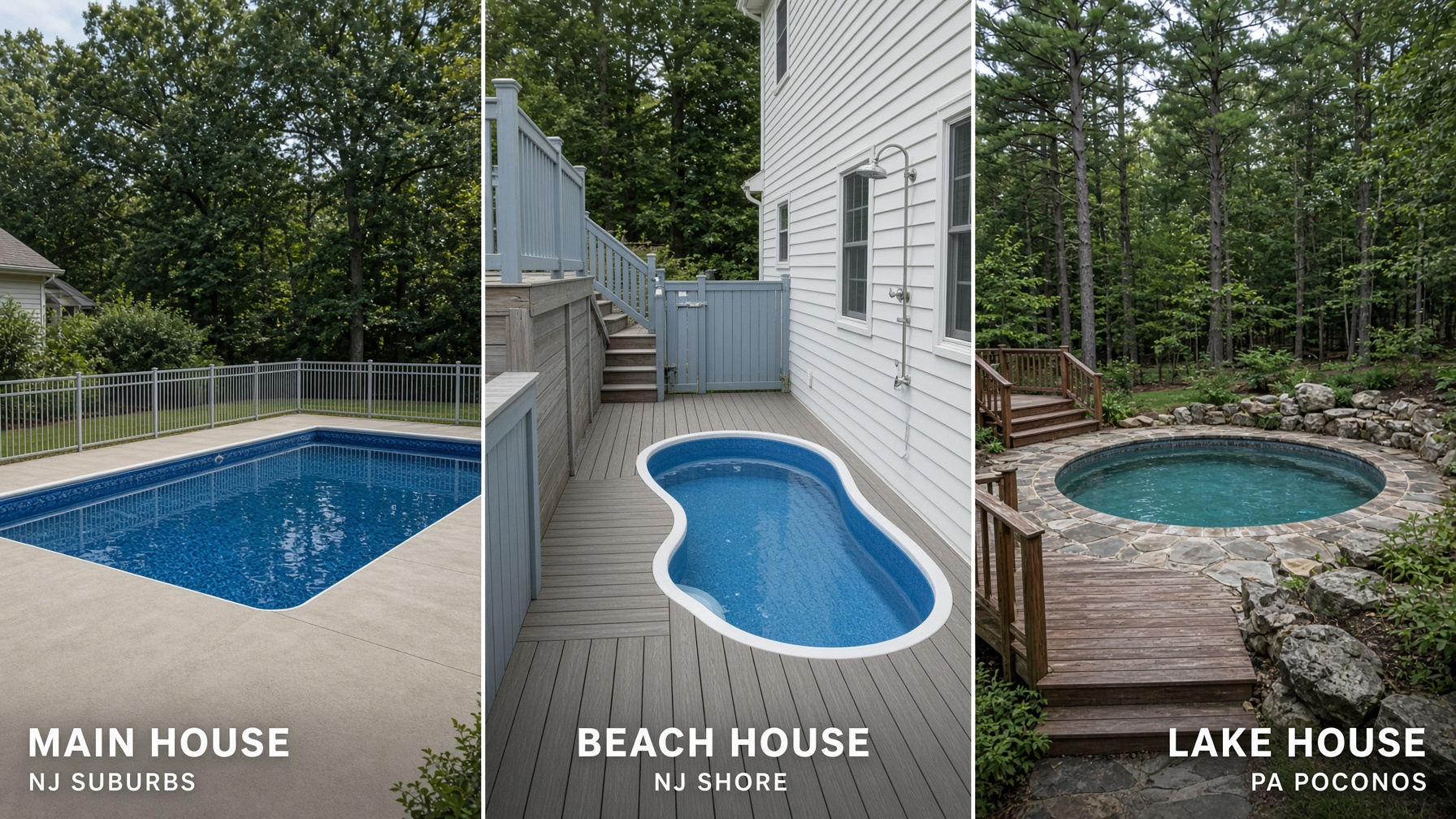
The most common friction point of owning secondary homes is the Friday afternoon supply run. You are at the pool store near your primary home, trying to buy replacement filtration media and gaskets before you make the long drive to the vacation house for the weekend.
Because you are not standing on the equipment pad, you are forced to guess. If that property utilizes a high-rate sand filter, guessing the media capacity is a disaster. If you look at a standard Hayward S244S rating plate, it explicitly requires exactly 300 pounds of filtration sand to function correctly. Buying 200 pounds compromises the entire filtration cycle, leading to cloudy water and poor sanitation. You arrive for the weekend, tear down the filter, and discover you cannot reassemble the system because you guessed the wrong tank capacity from memory while standing in a store three hours away.
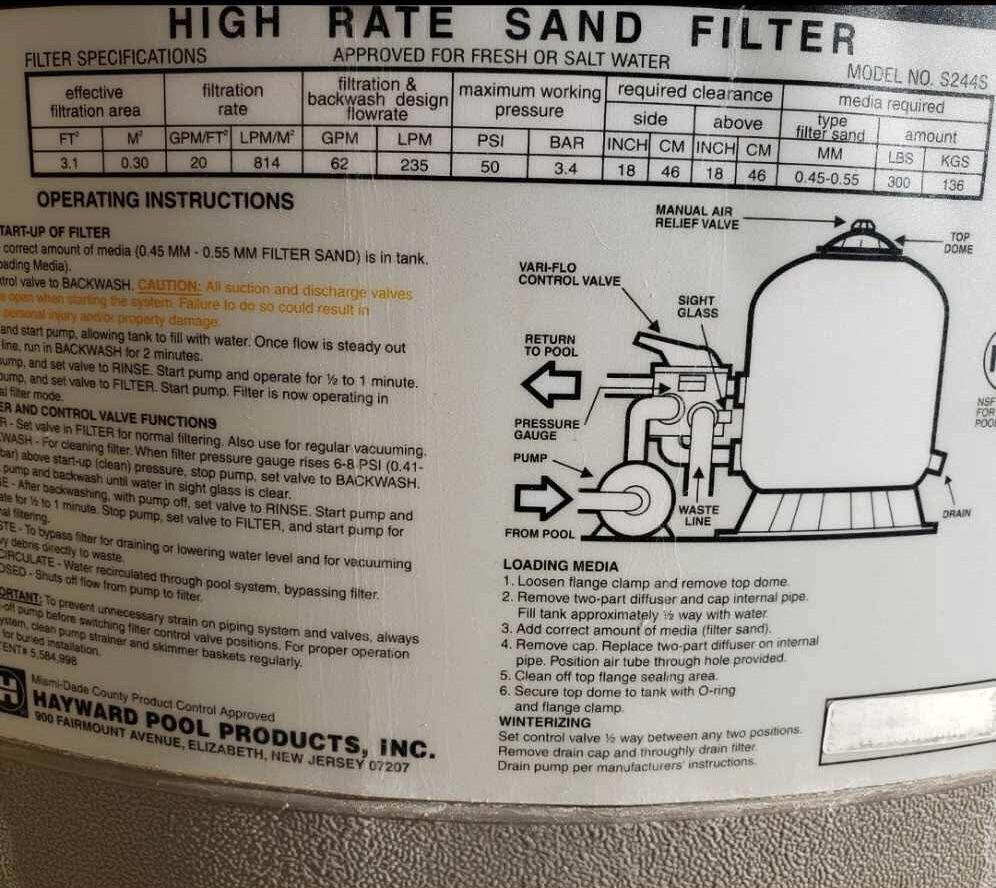
Even if you remember the exact model number of the filter tank, it is not enough to fix a failure. The manufacturer rating plate on a Hayward S244S clearly provides the model number, the 62 GPM flow rate, and the sand requirement. However, it completely omits the internal ecosystem of replacement parts that actually break.
The sticker only identifies the fiberglass shell. It does absolutely nothing to help you order the internal circuitry, gaskets, and valves required to repair it.
The equipment pad is the most hostile environment on any property. Constant UV exposure, extreme weather, and corrosive chlorine ensure that pump motor data plates will eventually turn completely white.
When a pump motor burns out at the beach house, you cannot simply order a generic "1.5 horsepower motor." The metal data plate contains a matrix of critical variables: voltage, frame size, and the Service Factor (SF). The Service Factor is a hidden multiplier. A 1.0 HP motor with a 1.5 SF is actually a 1.5 HP motor. If you replace it with a 1.5 HP motor that has a 1.0 SF, you have significantly downgraded the system's power. Furthermore, if you call a local professional and say, "The pool pump is broken," you have initiated a blind dispatch. The technician will charge you an hourly rate simply to drive to the property to identify what you own before they can even order the replacement.
Do not rely on your memory across state lines, and do not wait for the sun to destroy your hardware's identity. Photograph the manufacturer data plates on the pumps, filter housings, heaters, and salt cells at each of your personal properties.
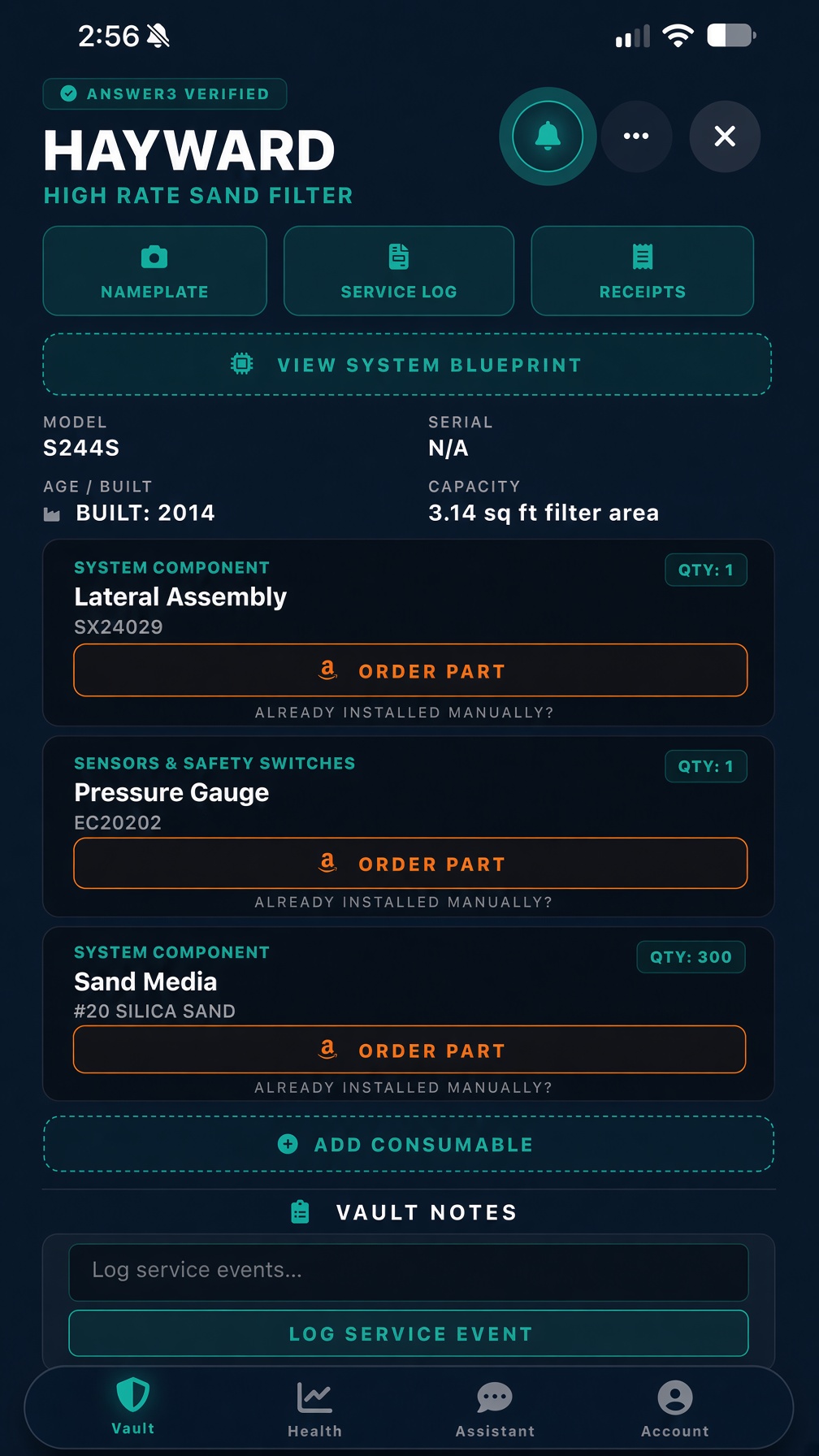
Answer3 Vault uses an AI scanner to lock the exact brand, model, horsepower, Service Factor, and capacity into a permanent Digital Home Passport designed exclusively for individual homeowners. By utilizing the Manager Fleet framework, you can seamlessly toggle your Vault between your "Main House," "Beach House," and "Lake House" property profiles.
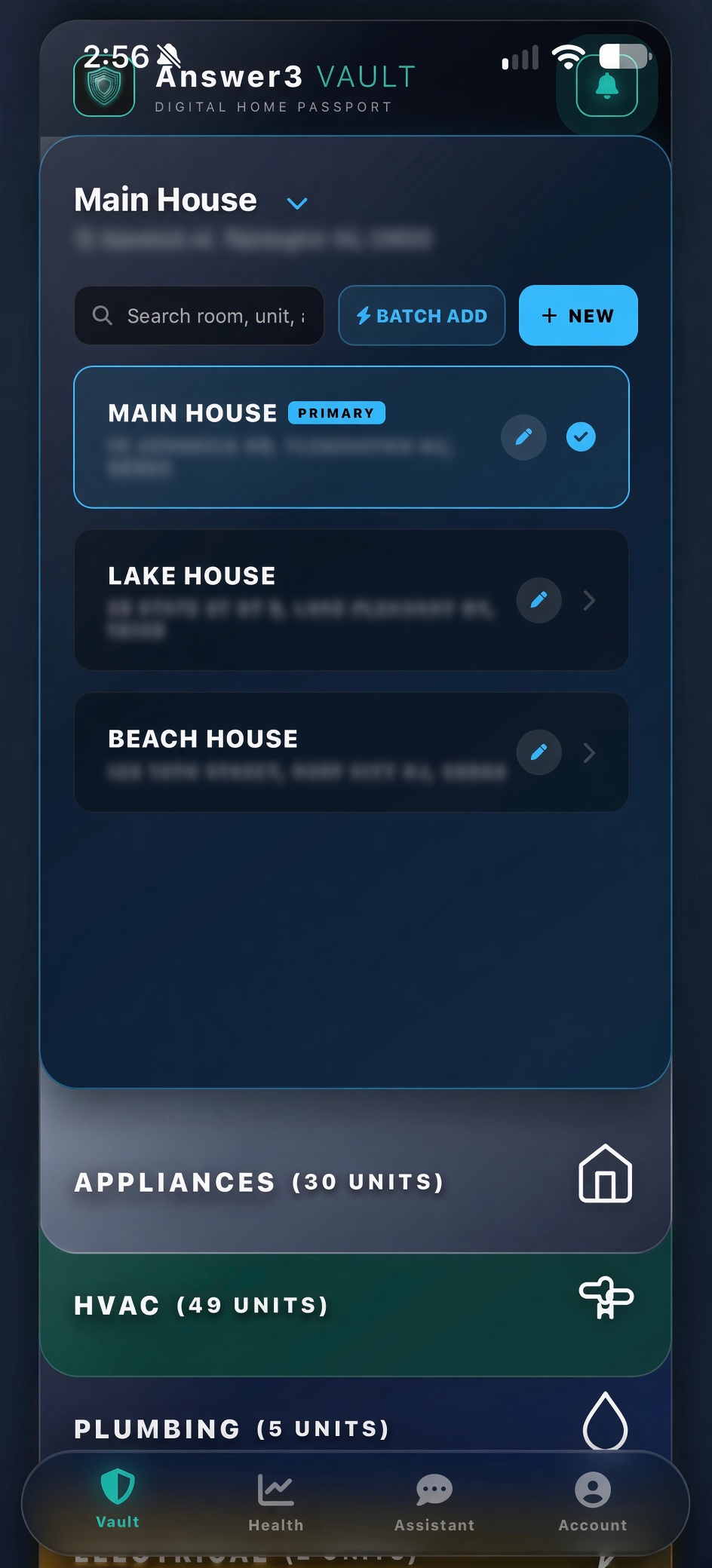
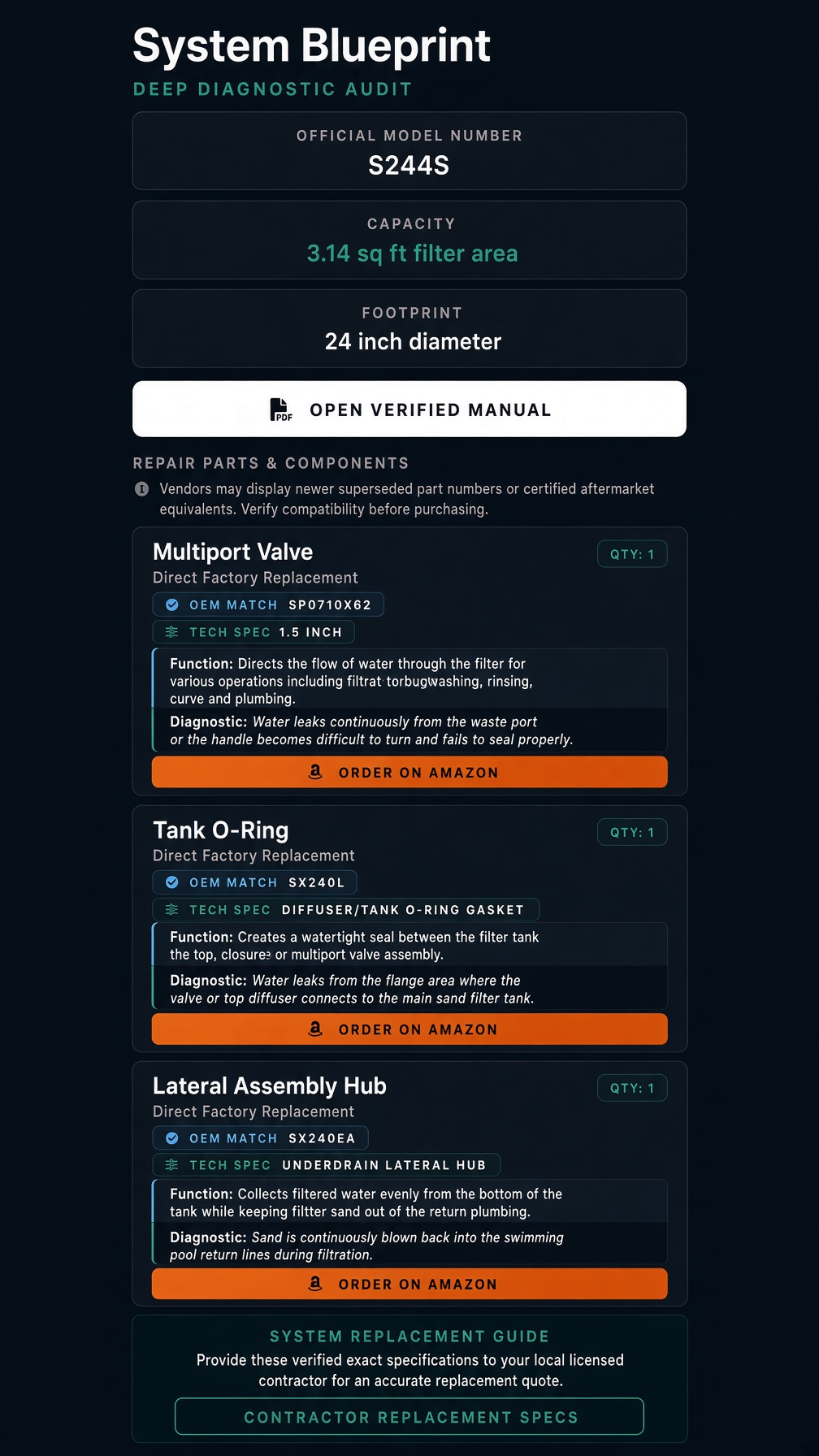
The System Blueprint takes over where the physical sticker fails. Scanning that Hayward S244S immediately maps the 300 pounds of #20 silica sand, the hidden SP0710X62 Multiport Valve, and the specific lateral assemblies to your lake house dashboard. When the filter leaks at the vacation home, you aren't guessing specs from a hundred miles away. You own the exact blueprints required to route a highly specific service request to a local professional or source the OEM parts directly via Amazon, ensuring the repair happens on the very first trip.

Exact-fit internal valves, verified motor specs, and OEM filtration media routed directly to your door. Stop mixing up the hardware at the beach house with the lake house, and let the Vault organize your secondary homes automatically.
Download on the