The plumbing aisle is the HVAC aisle with rust on it. You are holding two variables, no record, and the bill is exponentially worse if you wait until the floor is wet. People treat the last Home Depot receipt as the specification, which is exactly how you buy the wrong anode rod twice.
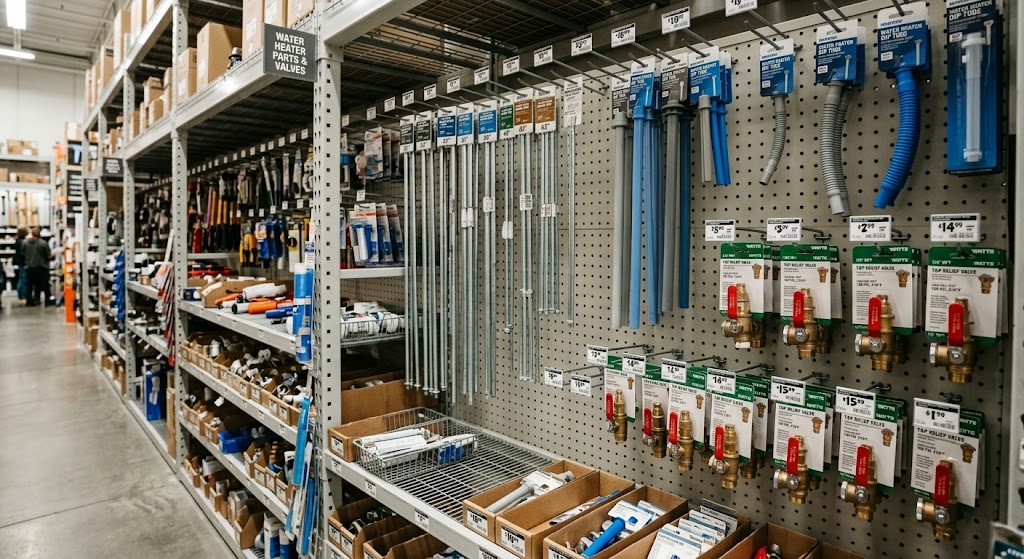
The plumbing aisle is the HVAC aisle with rust on it. You are holding two variables, no record, and the bill is exponentially worse if you wait until the floor is wet.
People treat the last Home Depot receipt as the specification. It is the exact same failure as a dirty furnace filter: if the last anode rod was already the wrong alloy for your water chemistry, you will install it again and wonder why the tank still smells or still rusts.
Gallon size, fuel (gas, electric, heat pump), vent type, and manufacturing year live strictly on the rating plate. None of that data is printed on the front of the jacket you see from the doorway.
A plumber who rolls to your house without those four facts is diagnosing the issue in your driveway. You pay for that hour.
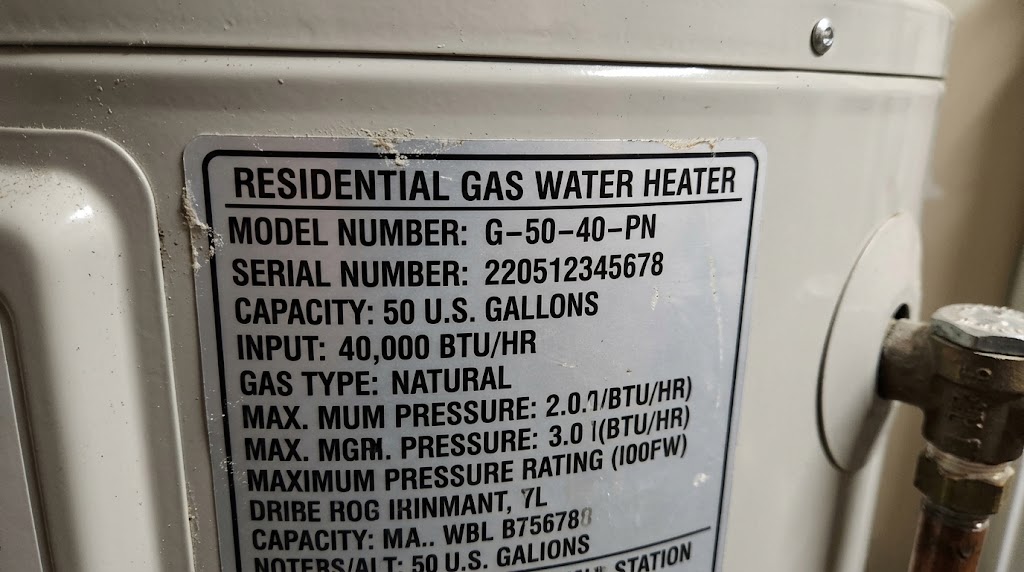
The plate on the side of the tank is the absolute identity: brand, model, serial, capacity, wattage or BTU, and the year code hidden in the serial. That is exactly what a replacement tank, an expansion tank, and an insurance claim all require.
It is also the one thing nobody photographs until the drip pan is full. The plate sits behind the furnace, tucked behind the dryer, or inside a closet with zero lighting. If you do not capture it while the tank is dry, you will be on your side with a phone flashlight after the valve has already opened. “It’s a 40-gallon Rheem” is not a specification.
The anode rod is a sacrificial consumable. Aluminum, magnesium, or aluminum/zinc—putting the wrong metal in the wrong water chemistry is how you get sulfur odors, shortened tank life, or a rod that simply does nothing.
Anodes are not generic sticks. Magnesium is common in soft water. Aluminum or aluminum/zinc shows up where odor or hard water is the primary complaint. Furthermore, rod length and thread diameter follow the tank series, not the aisle label. A rod that is too short leaves the bottom of your tank unprotected. A rod that is the wrong alloy is just theater.
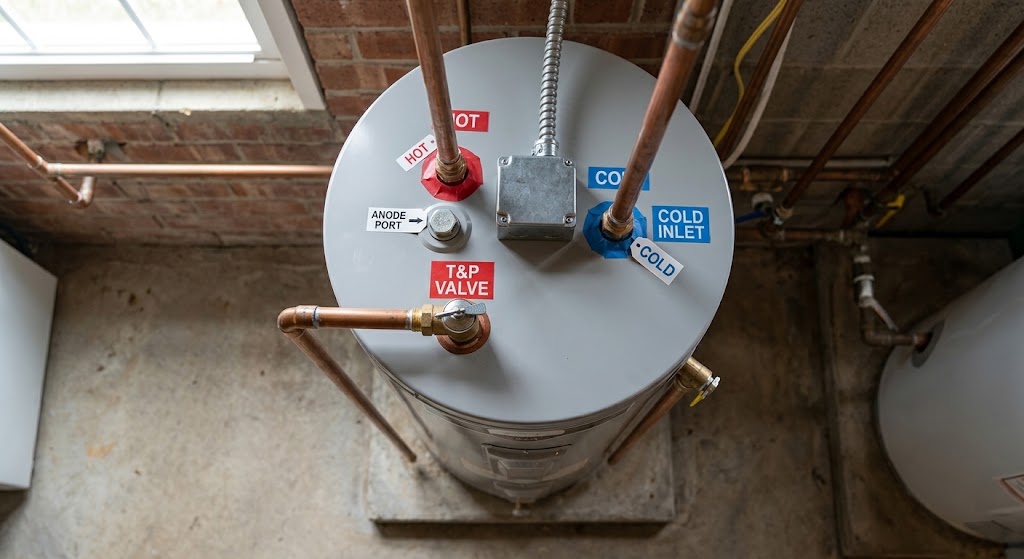
Temperature & Pressure (T&P) valves are rated by pressure, temperature, and thread size. Dip tubes are dictated by length and material. Expansion tanks rely on pre-charge and connection sizes. All of them look completely interchangeable on a pegboard. None of them are.
That is two distinct frictions: you do not know the exact tank, and you do not know the OEM line for the rod and the valve.
Photograph the manufacturer rating plate. Answer3 Vault uses an AI scanner to instantly write the brand, model, serial, age, and system type to a permanent Digital Home Passport card for that water heater.
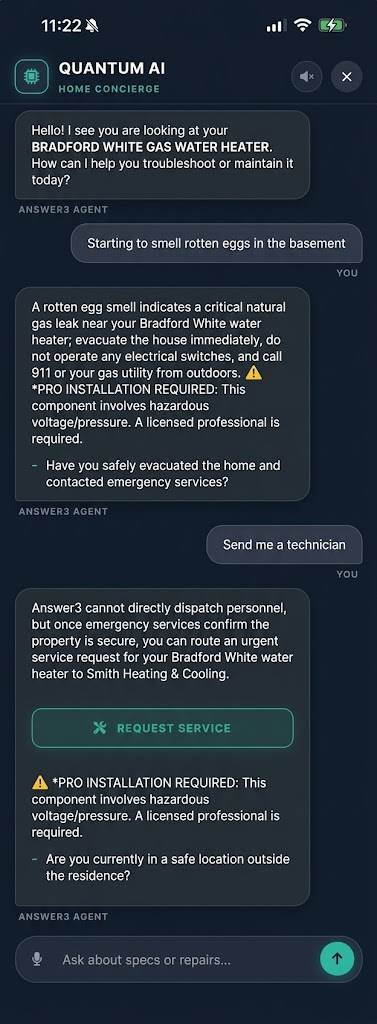
From that verified identity, you do not just get part numbers—you get frictionless dispatch. When the tank leaks or the rod is seized, tap your Quantum AI to initiate a service request. The Vault packages your exact tank capacity, fuel type, and venting specifications into a digital dossier and routes it directly to an elite local contractor in the Answer3 Partner Network.
You are not paying a plumber an hourly emergency rate just to drive out, read the capacity, and drive back to the supply house. The contractor receives your exact OEM blueprint in their dispatch portal before they ever put the truck in drive. They arrive with the right tank, the right anode, and the right valves. The first trip is the last trip.

Stop paying for unbillable scouting trips. Request service with absolute precision. Quantum routes your logged brand, model, age, and capacity directly to vetted local contractors so they arrive ready to fix it.
Download on theScan once. Keep the card. Route the exact specs to the professional with one tap.